
Countering AI-Enabled Scams
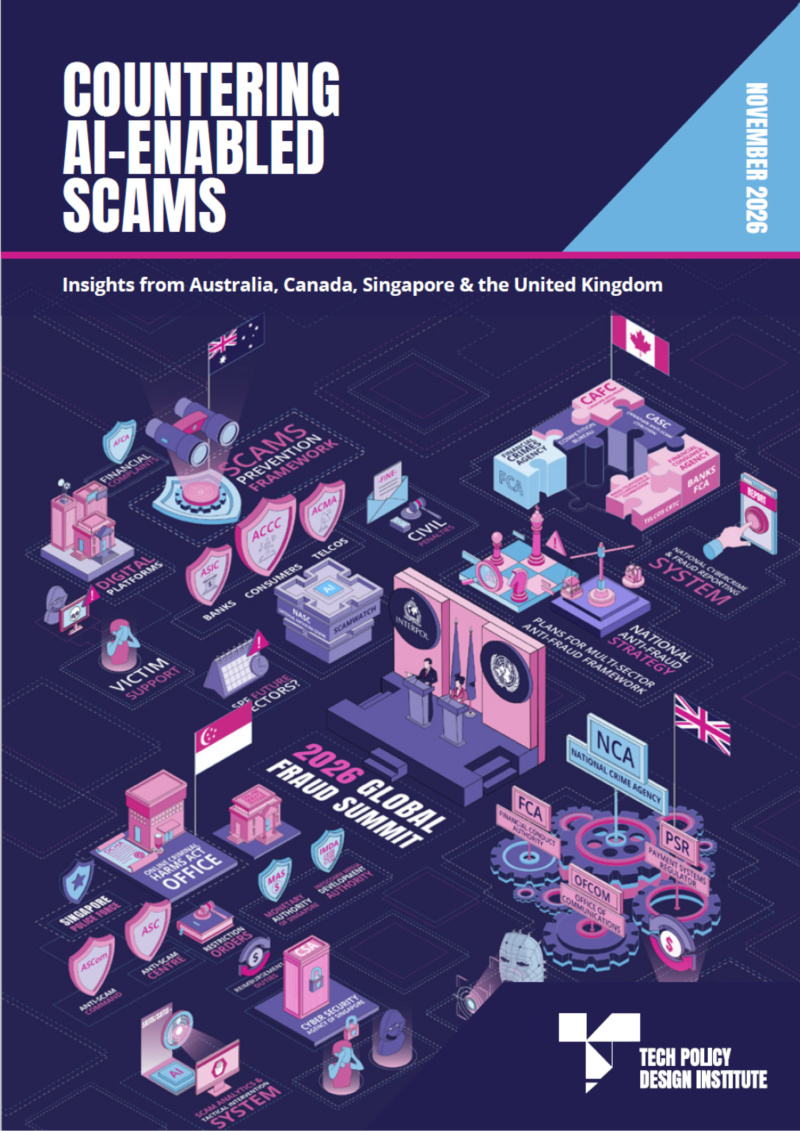
Countering AI-Enabled Scams: Insights from Australia, Canada, Singapore and the UK
As AI makes sophisticated scams easier to create and scale, governments and the private sector are facing a shared challenge: how to prevent harm, support victims and determine where responsibility should sit.
TPDi’s new international report, Countering AI-Enabled Scams: Insights from Australia, Canada, Singapore and the United Kingdom, brings together in-country policy expertise to examine how four jurisdictions are responding to this evolving landscape.
The report provides leaders and decision makers with an international snapshot of different approaches to prevention, disruption and victim protection, alongside international initiatives supporting cooperation across borders.
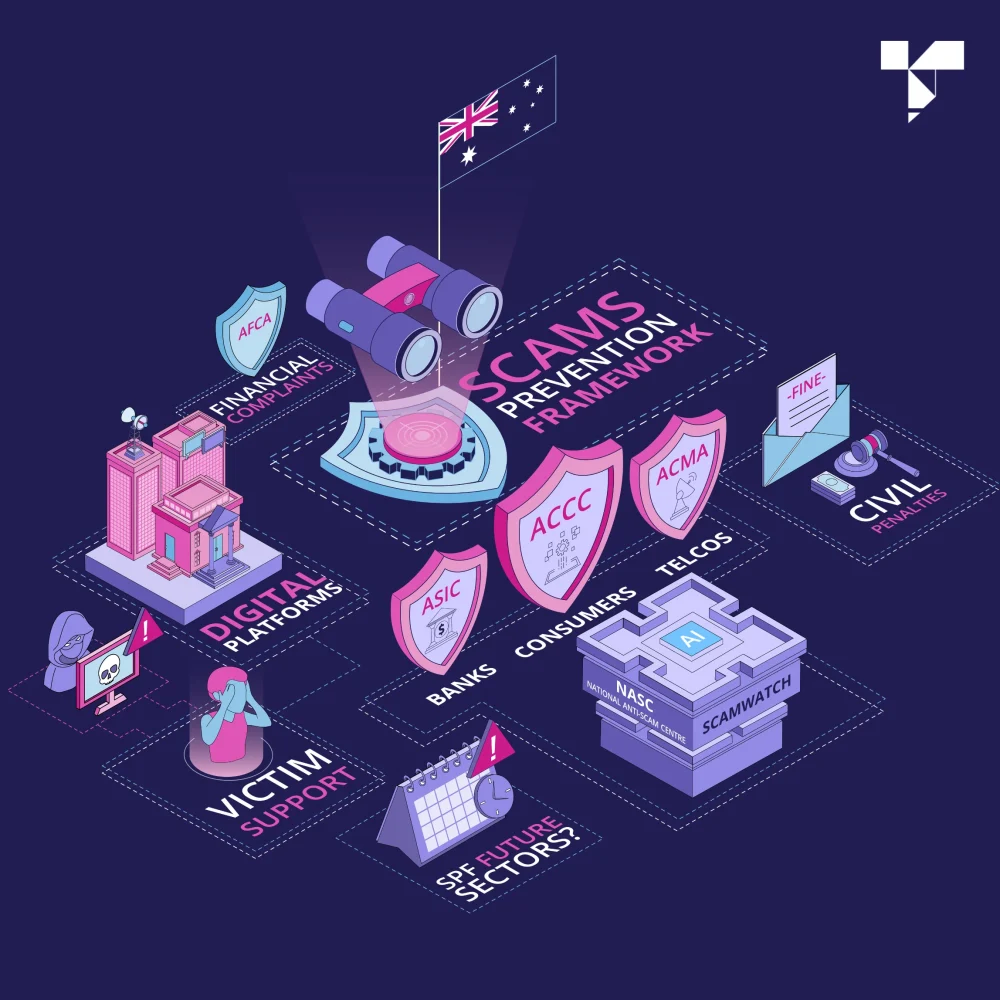
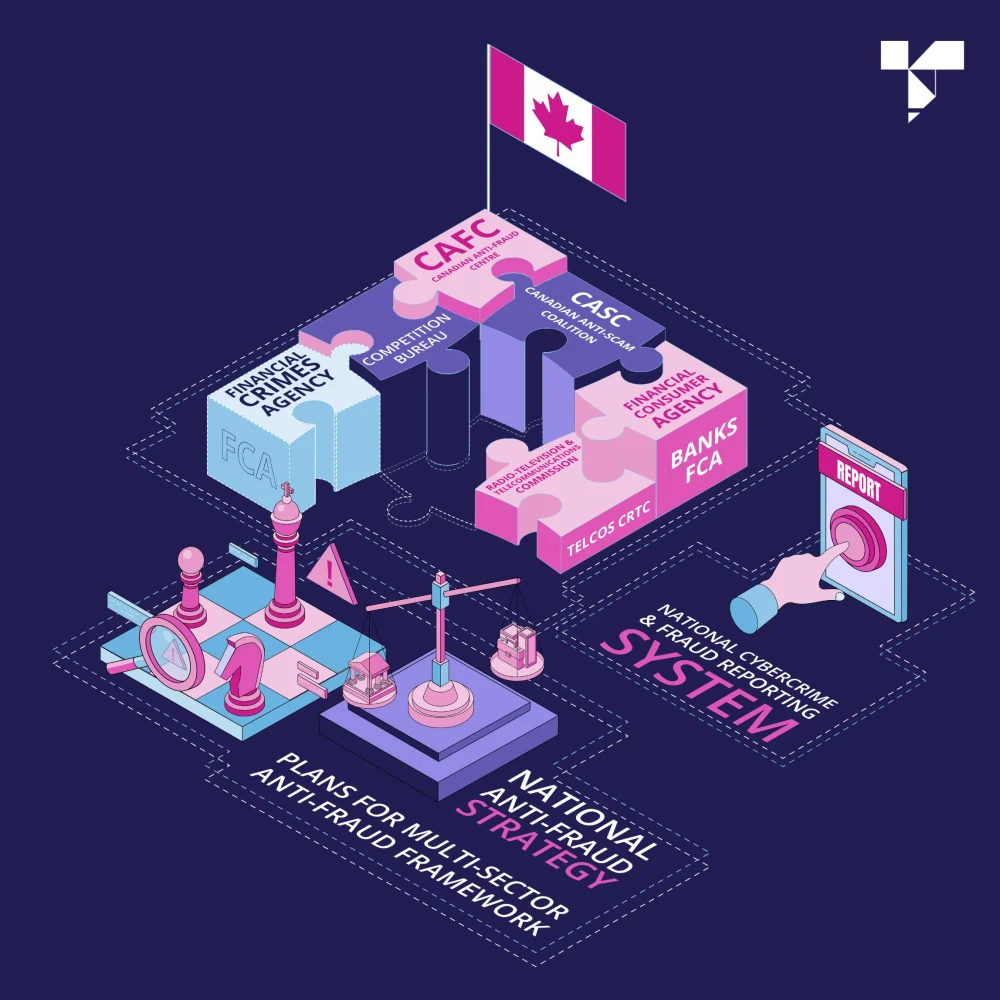
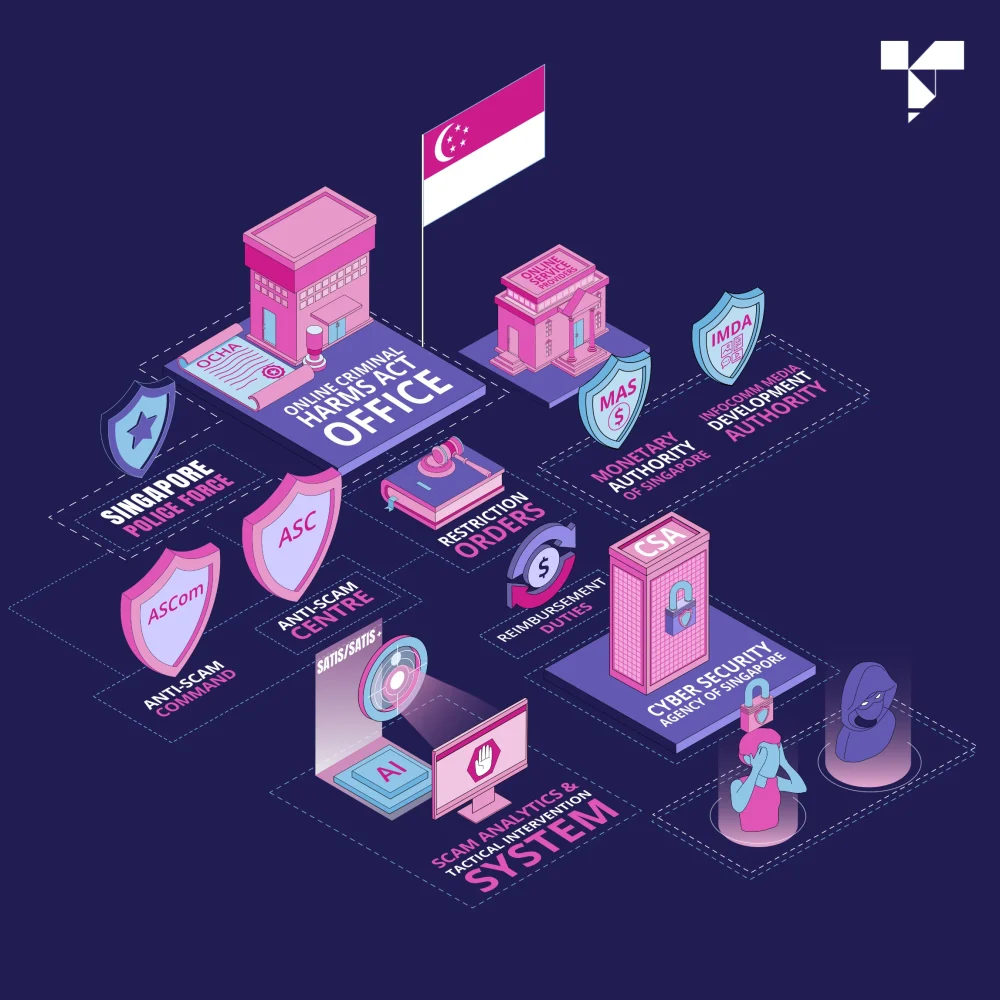
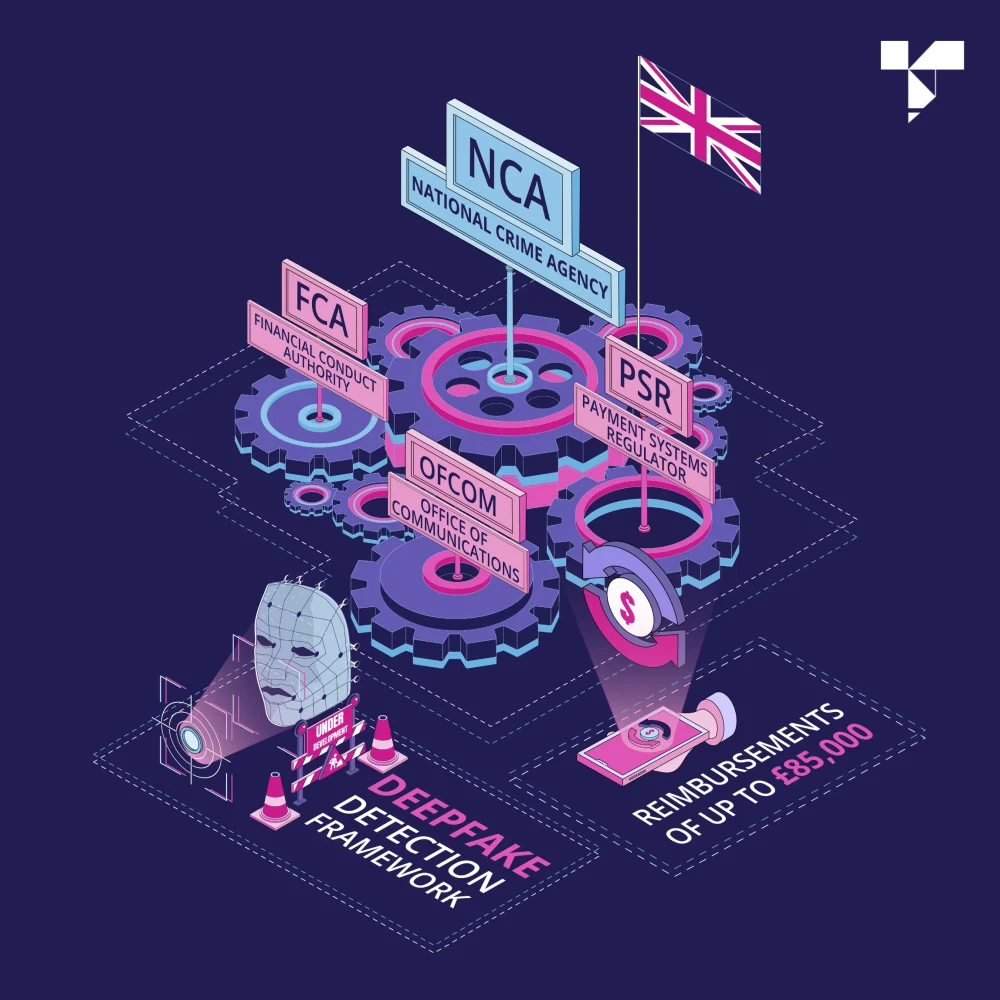
Four illustrative jurisdictions. One global challenge.
The report highlights three emerging areas of focus:
1. Multi-sector approaches:
Responsibilities for scam prevention and response are increasingly extending across sectors, including banking, telecommunications and digital services.
2. Public-private cooperation and intelligence sharing:
Approaches across the four countries include greater cooperation between government and the private sector, intelligence sharing and scam disruption. The report also considers cooperation across borders.
3. Victim support:
Nations are taking different approaches to reimbursing scam victims, including whether reimbursement is mandatory or a policy expectation, which losses are covered and the thresholds that apply.
Together, the three areas provide a lens for understanding how different policy and institutional settings are responding to shared challenges.
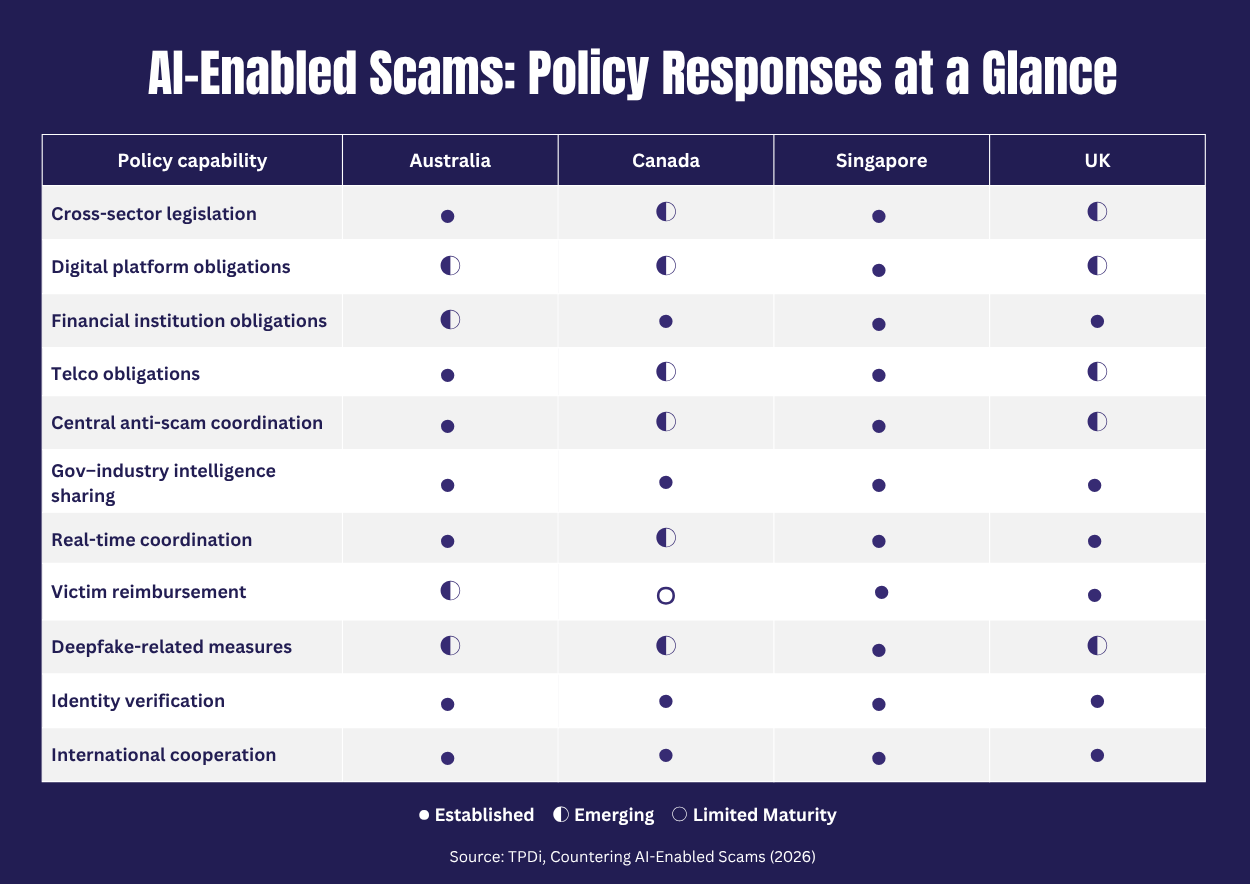
Read the report
The four country profiles were authored by in-country policy experts, bringing local policy context and perspectives to the international comparison.
About the Authors:
The report brings together contributions from policy experts across Australia, Canada, Singapore and the United Kingdom, drawing on their respective expertise to examine national approaches to countering AI-enabled scams.
- The Australian chapter was authored by Thomas van der Valk, Senior Fellow at TPDi.
- The Canadian chapter was co-authored by Keldon Bester, Executive Director of the Canadian Anti-Monopoly Project and Fellow at the Centre for International Governance Innovation, and Curtis McCord, Policy Analyst at the Canadian Anti-Monopoly Project.
- The Singapore chapter was authored by Helena Yixin Huang, Associate Research Fellow at the S. Rajaratnam School of International Studies.
- The United Kingdom chapter was authored by Isabella Wilkinson, Senior Research Fellow at Chatham House.


This report was made possible by the support of Microsoft. TPDi retains full independence over our research and complete editorial discretion of outputs. Learn more about TPDi’s blind trust funding model and how this protects and promotes our independence.
Illustrations are by Guilhermo Clerch. Report typeset and design is by GRiD. Copyediting by The Write Path. Generative AI tools were used in a limited capacity to assist with summary and editing processes.
All arguments, analysis, findings and final content in this report reflect the views and work of TPDi and the authors.
⬇️ Download the report| ➡️ Visit the Countering AI-Enabled Scams News Event Page