
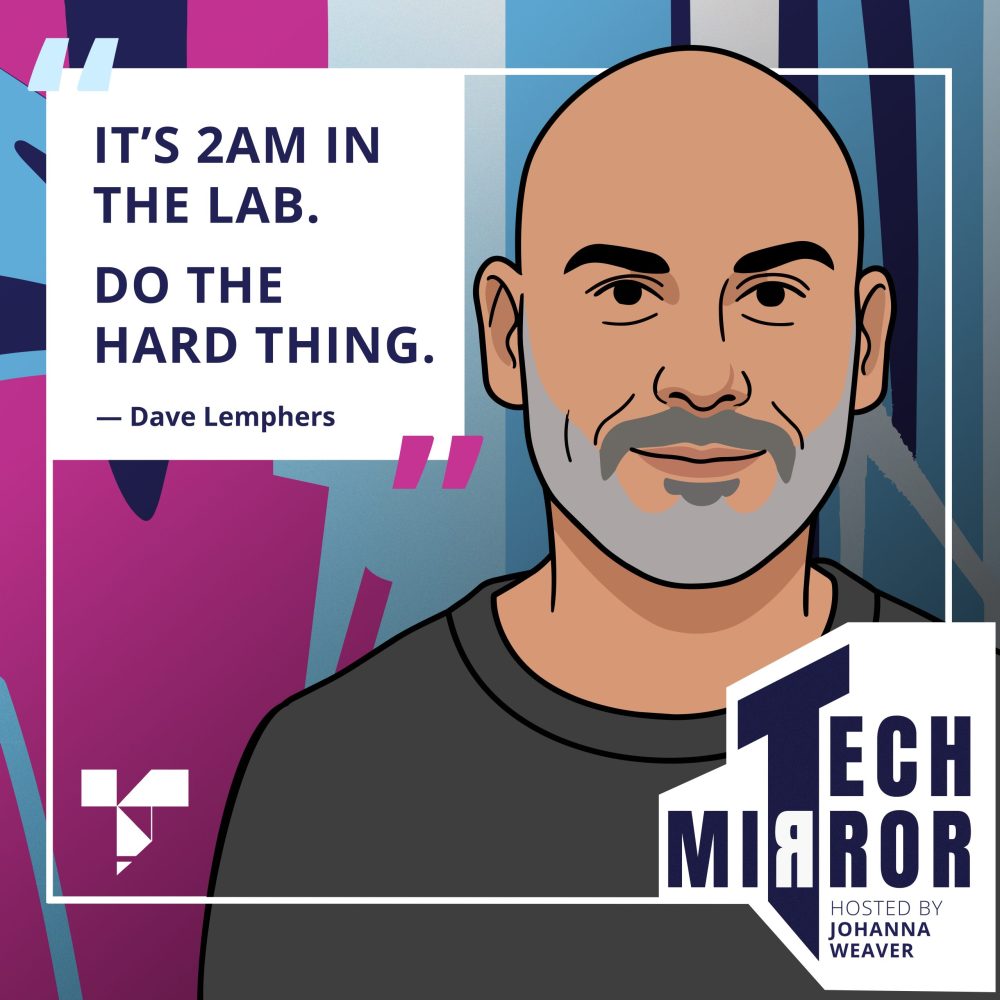
What would it take for Australia to build its own AI future? The Australian Prime Minister made a landmark speech on 15 July declaring that his government would shape Artificial Intelligence rather than be shaped by it. Just days before the speech, Australian AI company Maincode beta launched Matilda, an Australian-built AI platform. Johanna Weaver sits down with Maincode CEO Dave Lemphers to discuss Matilda, Australian-made AI, and the hard realities of creating a world-class technology company from Melbourne. From compute clusters to copyright, to national ambition, this is a conversation about building capability that lasts.
Links
AI In Australia’s Interests | Prime Minister of Australia
Meet Matilda, Australia’s answer to ChatGPT | Financial Review
Maincode Builds An AI Factory for Australia with AMD | AMD
For transcript and full show notes visit techpolicy.au/podcast
Transcript
Johanna Weaver: [00:00:00] The Tech Policy Design Institute acknowledges and pays our respects to all First Nations people. We recognize and celebrate that among many things, Indigenous people were Australia’s first tech innovators.
Dave Lemphers: You know, we’ll keep the good fight going and we’re gonna keep building Matilda and it’s 2:00 AM in the lab, let’s do the hard thing.
Let’s write code, right? And we built the code and the ship cycle that led up to Matilda was absolutely the hardest I’ve ever done in my life. If we say we’re an Australian made AI company, that means something. We’re here to build a sustainable AI industry for the next generation that’s gonna last the test of time, right?
10 years from now when America goes, “Actually, we don’t want Australia to be that smart,” what are we gonna do? Grovel on our hands and our feet and go, “Please?” And that’s, that’s my biggest fear is I don’t want my kids to be disadvantaged in a world where AI absolutely is the differentiator[00:01:00]
Johanna Weaver: Welcome to Tech Mirror. I’m your host, Johanna Weaver, and this is the podcast where we talk about how technology is shaping our world, and how we, the humans, can shape technology back. Now, I’m not sure if maybe the PM’s been listening in to the podcast, but on the 15th of July, he gave a landmark speech all about how we can shape AI in Australia’s interests.
And I was really interested in the way that speech was framed. It was very familiar in the way that he was talking about Australia needing to shape our future, rather than letting that future shape us. And in the speech, he talked about how, and here I’m quoting him, “Australia’s power, our [00:02:00] agency, our choice, lies in embracing change and shaping it.Not just adopting or accommodating AI, but designing it, making it, and building the capability right here.”
And today’s guest is doing just that. Dave Lempers is co-founder and CEO of Maincode. And together with a small but very mighty team, he has built Matilda, an Australian-developed AI platform that was beta launched just days before the PM’s speech.
So Dave, welcome to Tech Mirror.
Dave Lemphers: Thank you for having me.
Johanna Weaver: So Dave, you’ve spent years building technology for international companies like Microsoft or AWS, Amazon Web Servers, but also for Australian company EasyGo, which spans gaming, crypto, and gambling. And then in 2024, you established Maincode. What made you take the leap and establish an AI company of your own, [00:03:00] and to do it in Australia?
Dave Lemphers: It, so that story goes back a little bit to when I first started working in Australia. So I, um, graduated from Swinburne, you know, with, with like a robotics hardware background, and, um, started working in industry for a couple of years. Did my first startup when I was very young, in my early 20s, and found it very frustrating to be in Australia where people felt…
You know, I used to say, right, like they just wanted to get it out of the ground or off a sheep’s back. But if you were building something really cool, technically no one really cared, and so y- bootstrapping was the norm. Um, you kinda had to do every deal paycheck to paycheck. And, um, when the opportunity came up to go join Windows Azure, right, you know, as, as kind of a very early engineer on that team, I was like, “I’m super excited to go experience the US.”
When I got there, I got to see what real hardcore engineering looked like and that tip-of-the-spear thinking, but specifically around innovation, right? And that you’ve gotta go out into this very uncomfortable, cold [00:04:00] frontier because that’s where you’re gonna discover and solve real hard problems. But you’ve gotta have a thick skin, because people are going to stand on the shore, and they’re gonna say, “Oh,” like, “look at these idiots going off into the, into the frontier, into certain death.”
And you’ve gotta have a kind of conviction about why you’re doing it. And I think when I got back to Australia and met Ed, you know, and, and was working for Ed at EzyGo, we, we would talk a lot about the fact that Australia hadn’t really had its moment yet. You know, th- you know, you’d have the Atlassians and all that, but let’s be frank, like they’re not, you know, tech juggernauts who’ve stimulated the technical ecosystem in Australia at all.
Uh, and I think their moves overseas show you that that’s where they ultimately wanted to take technology in Australia. So we said, “What if we built a Silicon Valley-minded startup and did the hard thing, right?” So Maincode’s principles, one of the biggest principles is do the hard thing. What would that look like, and could we do it?
And so my background in AI, you know, Ed’s, um, belief that, you know, [00:05:00] AI’s absolutely the future, uh, for Australia and, and the world. We kinda conceived this idea of Maincode and, and that started the journey, and, you know, the, the goal was always, what are the hard things that people say we shouldn’t do or can’t do?
Can we do it? Um, and, and that was pretty much the start of the journey.
Johanna Weaver: Mm. So you’re talking about Ed there, Ed Craven, who’s co-founder and CEO of EasyGo, but also a majority shareholder in Maincode.
And, you know, and it resonates actually with me, I think, when you’re a founder, having to have a thick skin ’cause people look at you and go, “Why are you doing that?”But actually, that’s what happens when you’re doing something for the first time, right?
But also, your valuesthey really stood out to me as being quite different. So another one of your values that I really liked is that you say, “It’s 2:00 AM in the lab.” Yeah. This is, this is not a 9:00 to 5:00 job that you’re doing when you come and work for Maincode.
And I think in a, in an era where so much of the focus is on work-life balance, and just owning the fact that, like, this is a [00:06:00] passion and a, a lifestyle choice almost, um, it really stood out, uh, in terms of the way that you’ve positioned it. Can you tell us a little bit about what Matilda is? So Maincode is the company.
Matilda is, is the application that you have built. Now, most people know of ChatGPT and Claude. Underneath those sit the particular models that drive the AI assistants or AI chatbots. What is Matilda? Is… Like, what have you built? Have you built the AI assistant, or have you also built the model, or both?
Dave Lemphers: So Matil- Matilda’s actually like a product family, is probably the best way to think about Matilda. And so Matilda encompasses Matilda Chat, which is you can go onto matilda.maincode.com today, register your account, use it like you would use ChatGPT or, or Claude. Um, it’s, it’s- And I
Johanna Weaver: encourage people to do that.
Dave Lemphers: Oh, [00:07:00] and download the, uh, a- Apple app. We’ve got the Android app coming as soon as Google jumps up and helps us, if they’re listening. But, you know, the, the goal is that we wanted to build a state-of-the-art capability. So Matilda is a, a, a family of things. So it’s Matilda, the web app, the iOS client, it’s the software layer.
We also have Matilda Code. Um, so you can get… If you reach out to us, we’ll give you Matilda, the CLI coding agent. We’ve got a desktop coding agent. Uh, all of these are early in beta right now. We’re, we’re doing some really exciting pilot programs with people like EY. But so, so that’s kind of like where people enter, right?
Like, they’re either developers and they’re using Matilda Code, or they’re businesses and, and consumers using matilda.maincode.com. And then underneath that software layer is a, a very complex software system, which, you know, there’s the layer that deals with your sessions and your chats and your… the orchestrator and all that.
And then there’s a, a layer of the model serving. So you’d see in some of our research, we spend a lot of time focusing on how to improve [00:08:00] inference. Um, we’ve done a lot of customized inference work. Uh, we work very closely with AMD, uh, on, on how to do that better on our stack And then all of that software sits on top of a custom-built cluster that we designed and, and operate.
So that’s everything from the front-end network through the application database cloud. So we have a, a product called Main Cloud, which is what actually runs just like AWS, but it’s fully, uh, Australian made and, and run in, uh, Telstra data centers. And then, um, and then under that are the actual models that we, we train.
So we train a number of different models. Matilda is not just one model, ’cause obviously it’s a, a mixture of models, but they’re capable of doing coding, interacting with chat. They even do tool calling and, and coding support and ev- everything required to satisfy, um, what I would consider 2026 state-of-the-art kind of, uh, requirements.
All of that is built, operated, run, owned by Maincode. And, you know, we work with partners like Telstra, [00:09:00] Dell, AMD to… as our suppliers and providers, but we do every, every single piece of code, every line of code is written, managed, operated by Maincode.
Johanna Weaver: I just wanna reflect for a moment. You’re a company that is making what many people would call sovereign Australian AI, and yet you’ve said before that you don’t find the term sovereignty or sovereign technology particularly helpful.You’ve actually gone so far as to say that you’re ditching the term because it’s not useful for builders.
Can you explain what your aversion to the word sovereignty is? ‘Cause many people would expect someone building a company like yours to really… You know, some people lean into it as a sales pitch almost.
Dave Lemphers: So Maincode, from the very start- made a, a, a decision that we weren’t going to engage in the doom or rhetoric and theater and performance that OpenAI and Anthropic do, right? So- Hmm … I think it’s… I, I was just responding to Paul Smith at the AFR just before our call on, on topics of, like, [00:10:00] ChatGPT saying that, uh, GPT has escaped a sandbox, you know.
And it- it’s just so theatrical and performative, and there’s no way for you and I to actually ascertain if that’s true. There’s no way to know if that’s accurate. It’s just fud, right? And even Anthropic, like, every time I see their CEO and his face, and he’s, like, so pained, and he’s like, “Oh.” It’s like the theatrics are full tilt.
And one of the things we decided as Main Code is we’re not gonna do that. We’re not gonna engage in the rhetoric, the performance theater, the clutching of the pearls, the wringing of the hands, the “Oh,” like, none of that, right? We were gonna build great Australian-made product, and we’ll let those products stand for themselves, right?
And, um, we’re not gonna go out there and use terms like sovereign, right? Which is… doesn’t mean anything. What… Like, Johanna , what does it mean, right? I- if you say to someone, like, “We’re a sovereign AI company,” that doesn’t mean anything. If we say we’re an Australian-made AI company, that means something. You know, you can understand what that means.
And the other thing, too, is that we’re not here to [00:11:00] sell a product and, you know, try and, you know, raise a jillion dollars of capital and, and again do the US playbook. We’re here to build a sustainable AI industry for the next generation that’s gonna last the test of time, right? We don’t wanna just flame out and then drop off like Mistral, for example, having to, like, sell their soul to Microsoft, right?
Like, you know… And, and we don’t wanna have to do any of those things, so we’re trying to build a hundred-year company, and I think you do that by just working on good product, getting it in people’s hands, listening to them when they tell you it didn’t work, fixing it, rinse and repeat. Um, but yeah, I think sovereign as a term is overloaded.
It’s been weaponized. It gets thrown around Canberra, uh, by people who are looking to ship policy, not product. That’s not our game.
Johanna Weaver: When you’re talking, Dave, there about building a 100-year company, what did you, what was your reaction when you listened to the [00:12:00] PM’s speech? Did you listen to it? Um, was it significant for you?
And what, was there anything in it that surprised you? Did it get you excited? What was the response?
Dave Lemphers: So I, I did listen to it because I was very, very keen and very excited to hear. First of all, I think it was the f- the feeling of there was a pivot happening, right? Mm-hmm. So we’ve been o- we’ve been on the Hill regularly speaking to Senate committees, to, you know, senior, uh, ministers.
Uh, Andrew Charlton, you know, and I sat down and, and got to talk about… I showed him one of the very f- early demos of Matilda. Mm-hmm. Um, he was one of the first people in Australia to actually see Matilda. Amazing. This was over six months ago. And so I was, I was genuinely excited ’cause I felt like where the conversation had fallen flat, it felt like there’d been a change, right?
And, and some of the things that we’d been saying had, had started to take root. What was disappointing was that it was just a lot of words and very little signal, right? You know, essentially the two things I took out of it as, as my comments to the AFR after the speech were: focus on [00:13:00] data centers, boring, right?
We’re talking about an asset class, you know, disguised. You know, it’s, it’s a wolf in sheep’s clothing, right? It’s not AI any more than if we were to go set up an electrical factory, we could call that AI. Elec- you know, electricity for AI, right? Like, it’s just come on, right? Like, at some point, the basic asset class doesn’t matter.
And this, this absolute fa- you know, infatuation with data centers, data center. Who cares? It’s a concrete warehouse we could sell to Bunnings after, you know, it doesn’t work out, right? And, “Oh, but we got this deal with Nvidia.” To what? Park a bunch of tin in a warehouse and… Without the software layer serving tokens a- as an actual product, not just rented to La Trobe to run, you know, their, their data center workloads.
Like, it’s all p- it’s all performative theatrics that frustrates me. So when the prime minister gets up there and goes, “We’re gonna talk about data centers,” it’s like, w- okay, welcome. Welcome to 2024. And then the other part of that was this focus again on the copyright, and [00:14:00] it’s like, oh my goodness, that horse is so dead.
It’s so dead and flogged to pieces. Like, that’s what you’re breathing life into. Meanwhile, no discussion about procurement preference for Australian-made AI, no clear actionable plan with atomic steps towards moving Australia towards real meaningful goals in the AI landscape, um, no export support. Again, you know, as we speak to companies overseas, no government support behind Maincode.
Uh, we’ve got– We’ve just launched the first beta of the only actual top to bottom, tin to token, built in Australia, state-of-the-art AI platform, right? Like, we’re not talking about two fellas in a, a back shed running, uh, open code, right? Like w- this, this has been built over a year and a half. And again, just blinders, right?
And, um, so it was, it was very disappointing. Part of me felt a little bit like, “What did I expect?” You know, um, [00:15:00] from the PM and the government. And I’m sad, Johanna, that- A Australian made AI still is a talking point and a political point scoring activity, and that they don’t… What that tells me is they don’t actually understand the massive economic and industrial potential for the kids coming up now who don’t wanna go work in Telstra and ANZ and those traditional companies.
They want their shot in an AI industry that’s not being developed here, and we’re being told about CGT and all of this kind of stuff for generations that are absolutely home and hosed, right? So, so the, the kids coming up who are looking at eight to 10 times salary on buying their first home in a market with no inventory, and the government’s not doing anything about this incredibly powerful indu- industrial revolution.
And so it is frustrating. You know, we’ll keep the good fight going and we’re gonna keep building Matilda and, uh, doing what we can, but it, [00:16:00] it is frustrating when you then listen to that presentation and then you see all the bootlicking around that as well, right, of like, “Oh, what a legend. That, that’s the vision we needed.”
And it’s like, sure, fine. I
Johanna Weaver: guess. Look, I, I kind of fall halfway between the two things you’re saying there. Like, so I was in the room when the PM was speaking and,… There was an amazing energy in the room, and I kind of, I asked myself, “Why, why are we so excited about this?”
And I do think it’s because so many people, yourself and your team included, have spent so much shoe leather in trying to get national leadership and attention on this issue. Yeah. And so I think we do need to applaud the fact that the PM stood up and made this speech and has said, “I am prioritizing this.”
Um, but I’m also on the re- well on the record in saying that it’s in the delivery of, you know, how do we actually- Yeah … translate the vision into reality. So on that, Dave, i- what do, what do you think are the most important things for the [00:17:00] government to actually do, whether it’s policy, whether it’s investment, to deliver on the vision and the ambition?
Dave Lemphers: I… And, and I’m gonna take this very pragmatically, Johanna, ’cause I think that’s the right approach. We speak to customers every day now, like, we- we’re inundated with, with… Inquiries is one level of the inundation. The other one is people are just like, “We’re ready to sign up.” Yeah. Like, we’ve, we’ve got customers who are like- We want it
“We’ve played with it now for a week, and how do we sign up now and pay you money, and we just wanna use this product,” right? It’s fantastic. Mm. But I think what’s very clear is that there are now products in market. We’re not… We’re no longer a year ago when I was going up to the Hill, and I was meeting with the PM’s office and going, “Look, we got this idea.
We’re ordering a cluster. We’re building a team.” We- we’re now cluster is in place. We’ve built software that not even AMD has. We- we’ve had to do things that not even the US companies have done to fully operate the cluster and, and serve Matilda. We are the only true [00:18:00] full stack Neo AI cloud in Australia because we don’t use any Amazon or, or Microsoft services.
We’re fully hosted ourselves. These are incredible milestones that have not occurred in the Australian market. Mm-hmm. When you even consider the large players like Atlassian and Canva still use Amazon as their hosting partner, we’re actually one of the few real products built in Australia that run our own stack So when we speak to companies like EY, who are like, “We need built in Australia, run in Australia, like I can go touch the data center,” you know, somewhere, like that is crucial.
But it’s the first of the foundation stones, and if the government doesn’t actually pave the way for us, just like they did with all the other union-backed industries, right? Like, you know, they, they blocked out external competition to allow the, the local builders to, to survive. But the thought that we can, you know, long term defend the position in Australia against an OpenAI or an Anthropic if the government doesn’t start buying from [00:19:00] Australian-built companies, like they’ll sign multi-million dollar deals with OpenAI, and then they’ll, you know, sit on their hands when it comes to using Aussie-made stuff.
It, it, it’s not right. And I think that what I want the government to do is actually get proud of being Australian, right? Like, you know, let’s bring back Australian-made, right? And l- I, I always say this to people, like you wouldn’t go to the freaking Olympics and barrack for another country, right? Like, you know, y- y- and so as a country that is trying to build its place in this industry, to not get behind it every way you can…
And I think that’s what I want to see the government do. I want the government to say, “We want to see more MainCodes and more Matildas springing up, but we recognize that’s really freaking hard. Let’s pave the way for at least the next year or two, and let’s block these guys up.” But at the end of the day, our product is state-of-the-art, so it’s not like they can say, “Oh, it’s not as capable.”
It’s absolutely as capable. So it really comes down to like, are they going to… But here’s the thing, Johanna, that frustrates me. [00:20:00] America always protects their own, right? They’ll put the embargoes, the restrictions. They’ll make sure that America wins. And of course, we’re here just like no backbone, you know, no spine to be able to go, “Actually, no.
Don’t need your stuff, thank you.” Um- So just to- And, and that’s ahead of, that, that’s ahead of them potentially not even giving it to us anyway.
Johanna Weaver: Yeah. Yeah, I mean, i- particularly with the export restrictions that were placed- Right … out of the Trump administration. So I just want to be really clear on what you’re saying there.
Are you… So one thing is to say, actually, one of the most powerful things the government can do is to procure Australian-made AI. So, you know, actually use MainCode.
Dave Lemphers: Yeah.
Johanna Weaver: Another is to say we should not be using, um, OpenAI or Anthropic and Claude. Are you calling for both, Because m- that’s quite a dramatic call
Dave Lemphers: Yeah, I, I, I’m calling for both because it’s, it’s not unprecedented.
Mm. So if you look back, uh, and I was doing research into this [00:21:00] from the very first time we did telco, electrical, early semiconductor, uh, auto manufacturing. Th– A-Australia has a very, very long line of precedent where we have blocked out foreign– or we’ve made it– we’ve not blocked it out, we’ve made it very, very hard, or we’ve increased the barrier to entry in Australia to protect the local industry.
And so that’s all I’m calling for, right? And, and what that means then is that Australian Made has more advantage in the procurement process in government. That was not– that’s nothing new. And that it a- we also make it fair for Australian industry to grow by making it very hard for larger foreign entities that have way more resources than we do to come and tip the boat over.
Like, that, that’s what we’re talking about. And if you look back as well with the car import tax, the reason that was done is you’ve got countries that are like 10, 15 times the size of Australia. You have to protect Australian industry, otherwise, are we just renting everything? Is that all we are [00:22:00] from now on?
Like, all we do is we’re sales companies, right? So I– here’s the other thing. It’s like, oh, Anthropic and OpenAI are investing in Australia. How many engineers work here? None. All sales support, all consulting solution architects, all about selling into Australia. There’s actually no core engineering done here, right?
And so again, this idea that these brands come here and actually uplift our local, uh, generations, it doesn’t happen. We actually have to build some stuff here, you know. And, and I think that’s what I wanna see the government do, is recognize that 10, 15, 20 years from now, we need a thriving local AI industry where people are going and working on first-class product, selling to Australian businesses and exporting that product because we have an incredible export opportunity. The Australian Made brand, especially with tokens, Australian Made tokens are seen as very highly valuable, very sought after We’re safe, we’re regulated, we’re secure. A lot of countries wanna do business with us before they wanna do business with America and, and China.
Johanna Weaver: Yeah, and I think that is [00:23:00] something that Australia needs to lean into more, that we have a very specific competitive advantage there.
I just wanna flag that the proposal of, of restricting access would, would raise, and I’m sorry to be a total nerd on this Dave, but, you know, all sorts of challenges under, um, free trade agreements and things like this. But also frankly, the Trump administration who’ve made it really clear that they would retaliate if restrictions were made on US companies.
I’m just saying that for balance. Um, uh, I also think Jo- um, Andrew Charlton has spoken a lot. He gave a speech saying, you know, “This is the sliding doors moment. We need to procure Australian products.” Yep. But going back to that point of narrative versus action, we’re not yet seeing the government actually following that through.
Yeah. I wanna pick up on a- another point that you’ve, you’ve touched on a- quite a few times there, and this is, um, the compute clusters that you have. So you’ve made the point that you don’t use AWS, for example. You don’t rent any compute from anybody. You’ve built the clusters yourselves. You’re working with AMD, which is Advanced [00:24:00] Micro Devices, who are chip producers.
For those who aren’t living and breathing this, can we just start with a simple explanation of what a compute cluster actually is, and then I’ll go into why that’s important?
Dave Lemphers: I-i– when every you use any of these applications,they’re hosted in a, a data center somewhere with a set of hardware, and, and that hardware is under the control and management of, of an entity.
And so to deliver Australian AI in the form of Matilda, um, we could… we have to build a software stack. We could build that software stack anywhere. Um, and you know, you could do that, you know, in your laptop, you can do that in Amazon or Microsoft or Google. But once you actually deploy it and run it and people are using it, that has to be running somewhere day to day.
And what, what normally happens is people will just go to Amazon, they’ll, they’ll spin up a bunch of resources in Amazon, they’ll host their software there, and then that’s what you’re using, you know, when you do it. But every time you do that, your data is subject [00:25:00] to the US CLOUD Act. Um, and should the, uh, US government ever decide that they wanna subpoena that data, Amazon will give it up.
I– having worked at Amazon and Microsoft, I know how this process works. We will cough it up without any questions asked. There’s actually a team that’s responsible for, like, downloading all of your personal history, handing it over to the government. Now, that US CLOUD subpoena can actually come from a third party.
That’s what’s really scary, right? So another company can petition the government to sus- to subpoena your data. So it’s not just the White House has to decide that they wanna do something, um, like, your enemy could ask for that data, and the White House could go, “Yeah, we actually prefer the enemy over you, and we’ll, we’ll cough that data up through the US CLOUD Act.”
So it, it was all around, like, you know, homeland security and, you know- Yeah … being able to, like- In response
Johanna Weaver: to terrorism originally. Yep.
Dave Lemphers: Yeah.
Johanna Weaver: Yeah.
Dave Lemphers: But obviously now, in so many of these landmark cases where commercial organizations have compelled through friends of Trump how to get data of, like, civilians and stuff like that who are, um, seen as [00:26:00] agitators or whatever, that, that’s not good, right?
So when you, when you sit with your doctor, like I did recently, and he goes, “Oh, can I record this?” And I’m like, “No,” because I don’t want my health transcript going through Heidi Health and then landing in Amazon’s, uh, data center, and now my transcripts are with the US. So I… So w- these were the kind of motivating scenarios that we came up with.
The problem is, Johanna, and I know this intimately ’cause I ran the data center team at Microsoft for a number of years, standing up infrastructure to host a twenty-four/seven app is grueling. So what does that look like? We first of all have to go out to market and find a hosting partner. We did that. We selected Telstra because they’re the national backbone.
Uh, they’re an incredible partner of ours as well. I cannot speak highly enough of Telstra and the support they’ve given to Main Code and Matilda. So they give us a portion of a data center, highly secure data center. Ours happens to be out in Clayton. They… Uh, that, that literally looks like a concrete floor with electrical [00:27:00] cables and cooling.
We then go and procure racks of servers. Um, these are high-performance, state-of-the-art, you know, multimillion-dollar racks. Um, we acquired those through Dell. Uh, they’re fitted with AMD hardware. Those racks roll into the data center. Our team wire them up, install all the software, bring everything up, install Matilda, punch holes into the internet.
Everything’s flowing into Telstra into Maincode. That is a Herculean feat because, again, you’re dealing with companies like Amazon and Microsoft, multi-billion dollar companies, thousands of people who are monitoring and managing these clusters, and we’re doing it just as a small team in Melbourne. What’s been great, though, is that it’s forced us to have to write software that no one else has had to write.
So we have cluster management software, we have fleet management software that, uh… Like I said, when we were working with AMD and Dell They reached a point where they were like, “We just can’t do some of this stuff.” And we’re like, “All right. Yeah, it’s 2:00 AM in the lab, let’s do the hard thing. Let’s [00:28:00] write code,” right?
And we built the code and, you know, the, the ship cycle that led up to Matilda was absolutely the hardest I’ve ever done in my life. But it was so valuable because the capability hadn’t existed in Australia for decades. We, we don’t know how to do these things. And I think that was the thing that really struck me the most, was when you’re dealing with Dell and AMD, and they’re like, “We actually don’t know how to do this, like, locally.
We’ve got teams in the US who help Microsoft and Facebook and stuff, but on the ground here, we don’t have these capabilities.” And after we were done, Telstra had learned so much about how to do cooling, you know, liquid cooling. They built a completely dedicated cooling infrastructure for Maincode and Matilda.
We’d, we’d learnt so much and done things that in Australia hadn’t been done because it didn’t need to be done. And I think that’s what’s been so amazing. And now as we look to the future, our future clusters, we’re now generation two, generation three. We’re so far ahead, even globally, right? Like, the way we think about [00:29:00] inference and the rewrite we’re doing of, uh, the inference, uh, servers with Rust.
It’s state-of-the-art. It’s first class. Uh, our research is… You know, we, we just received word, um, that a couple of, uh, major papers have been accepted into the, uh, industry track for upcoming, uh, conferences. So I, I think what we’re showing is that, yes, on a small scale, we’re still state of the art. You know, we’re absolutely holding our head, you know, with the Anthropics and the OpenAIs.
We’re just not as big, but we’re absolutely as capable.
Johanna Weaver: Mm. And I think it’s… it really is extraordinary what you guys have managed to build in the period of time that you’ve managed to build it, and it needs to be celebrated and applauded, you know, in the same way we celebrate sports teams, for example.
Right. There’s a couple of threads I wanna, um, pick out of that. One is you’ve mentioned the inference compute, so that’s the compute that’s required if you’re using the model versus the training of the model. One of the very live discussions that I’ve been having here [00:30:00] in Canberra is do you need a different type of compute, a different type of data center for the different types of compute?
Yeah. What’s your ex- what’s your experience been at Maincode around that?
Dave Lemphers: So that’s actually a really, quite a salient point, Johanna. So when we developed the design for MC2, which is the, the cluster class that we run Matilda on now, we, we were like, “L- let’s, let’s do this so we can- Focus obviously on the training piece, ’cause the, the model training is very resource-intensive and, uh, requires probably the biggest part of the cluster.
But obviously we need to have an inference layer too, and we focused on that. I think what we’ve learnt… And, and there’s some, there’s some decision trade-offs you have to make around like networking, for example, right? Like a training cluster’s networking is very different because all of the nodes need to be able to talk to each other, right?
When you’re doing a training run. Inference, you don’t need that. You know, so unless you’re doing some kind of tensor parallelization, you actually don’t need to have those talking to each other GPU to GPU. So w-we went with a [00:31:00] very general approach in MC2 because we, we had to be prepared for anything, right?
Like cl- like that classic V1 where like we don’t know what we’re gonna hit, so let’s be ready to do everything. The problem is you end up paying a premium for that because training configuration is more expensive than inference. So as we now design MC3, we are very conscious of the fact that inference is actually a very different problem to solve.
But also, we’ve solved a lot of that in the software layer. We-we’ve, we’ve tuned and we have a paper recently, about how we, uh, were able to achieve a one million context window inside of, um, vLLM, you know, which was not supported by AMD, uh, in the community. So we’ve, we’ve done a lot of software innovation in that space as well.
But at the end of the day, you can’t outrun the need for raw horsepower, and I think w- as we plan out MC3 class data centers over the next 12 months, those are going to be heavily segregated into, you know, dedicated inference and dedicated training.[00:32:00]
Johanna Weaver: So Dave, a lot of the focus is on public interest compute, that Australia needs more availability for compute for researchers. If we had more public interest compute, would that have changed the way that you went about building compute clusters or building main code, or is that like an entirely separate conversation for you?
Dave Lemphers: It wouldn’t have, Johanna. So wh- when, when you dig into the dark, murky waters of academic clusters, what you find is that they’re… It’s unfortunate, but it’s, it’s quite a dark space, right? It’s overrun by, uh, ’90s era IT, uh, enterprise resellers, and we hear this all the time, and we experience it actually ourselves.
So when we built MC1, we worked with a, a integrator. You know, they didn’t really understand AI, but obviously wanted to sell us stuff, uh, and led us down a path which was just not usable at all. And so that’s actually what made us go, “Hang on, we have to learn this ourselves by scratch, design everything and own everything ourselves,” ’cause we can’t rely [00:33:00] on these folks who have been around since 2000 who sell to La Trobe and Deakin.
Um, and then you speak, like I, I’ve had conversations with like, uh, Sue, um, you know, Sue Kay, and when you hear about like what happens when they buy these clusters and then they sit there. Uh, the Maverick cluster is a good example now too, right? Like, it’s kind of sitting in this limer- limerent state where people aren’t able to use it, there’s infighting about how they p- run the cluster, how they run jobs.
Like it’s just, it’s just a massive asset going to waste, right? And I think what you find is that people think that, “Oh, I just go and speak to one of these resellers through NVIDIA, they’ll sell me a bunch of B200s and now I’m off to the races.” And it’s like, like it would be the equivalent of like when our parents bought their very first PC and brought it home, right?
It’s like, without the software stack, that thing is useless. You know, i- it’s just, it’s just a glorified asset that you get to… like a trophy that you get to show people. And l- go back to Monash and ask them how many actual [00:34:00] jobs have they run on Maverick, what ROI are they actually getting from that spend, and you will hear a very sad story.
Johanna Weaver: So do you think it’s not worth investing in public interest compute then? Y- you we should focus on private sector?
Dave Lemphers: No, no, no. What… No, what I mean, what I, what I meant to say, Johanna, was that I think what we have to appreciate is that if we are going to build public infrastructure, we need to go to experts who are doing it today.
And we c- and, and these old procurement pipelines that have paved the way for these companies that have been around for 20 years, you’re not… You’re gonna get the same outcome CSIRO and all those got. So that’s why I just want to be really clear, right? Let’s not keep doing the same thing expecting a different outcome, and then asking, “Why aren’t we succeeding?”
That’s not gonna work, right? But, but yeah, if, if someone was to come to Main-Code and say, “Help build an MC2 grade or an MC grade architecture for our university or our, our, you know, institution,” we would absolutely help them. It would just look so differently than what you would get if you went to the classic procurement path out to, you know, [00:35:00] industry.
Johanna Weaver: Which is es- essentially a much more technical way of saying what I say, which is that our existing supercomputing infrastructure is old and clunky, and we need to update it and bring it into the 21st century. Yours is a more sophisticated response, but we get to the same point.
Dave Lemphers: And that’s why we built Main-Cloud because one of the things, like our own team, right, our own researchers, ’cause we have re- academic researchers- residency researchers.
We have our own full-time team. They hit the, they all come from academia, right? Like, and so they all like, all of these challenges that we were facing, we were like, “We need to just reboot this whole thing.” So we built Main Cloud, which is this incredibly sophisticated layer that sits on top of the training cluster, and that’s what allows you to take that really expensive asset and suddenly distribute it evenly and fairly to everyone in a really high-performance managed way.
But you have to listen to the researcher. If you are, if you’re letting IT and procurement and finance tell the research organization what they need, you get no research. But if you listen to them and you hear what they want, and you understand how important [00:36:00] running their own custom jobs, having that containerization, using the latest tools, now you get some incredible…
And then that’s why a lot of these, uh, academic organizations and, and researchers come to work on the residency program because they’re like, “I can’t advance my research at ANU or these places. I’m gonna come to Main Code where I can run it on, you know, one of their clusters.”
Johanna Weaver: So skills, a lot of people say we don’t have enough skills in Australia. What’s your experience from a skills perspective? Has it been hard to get the right people to do this?
Dave Lemphers: It is, yeah. It’s, it’s hard to build a team. Um, we, we’ve only been able to build a solid 10 engineering team over a year and a half. Our bar is excruciatingly high, but I also think that we lack some of the cultural alignment around mission driven work.
Um, I think a lot of people struggle when you say, “This is not a job, we’re trying to actually deliver AI for Australia.” Just as much as we don’t have 10,000 [00:37:00] Olympians, yeah, it’s, it’s hard to find the kind of people to do this work.
Johanna Weaver: Mm. Um, you mentioned copyright was old news. Why do you say that? What, uh, what approach to copyright does Maincode take, and do you think that the conversation still needs to be had more broadly?
Dave Lemphers: So the reason I say it’s old news is I think it’s been a solved problem and it… and it’s a settled conversation, right? Just don’t steal people’s things. It’s really that simple. The… Obviously, that, that’s quite a, a, a simplistic view. How do you not steal people’s things? You optimize your training phases to take as much of the data that’s needed that doesn’t require copyright to inform the model’s base capability, language capability, and then post-train on the stuff that you actually need that’s less.
So that, that’s one of the things we learned very early was when you change the mixture and the process of model training, you can actually get a lot more done with less. And I think the reason was back in the day they didn’t think that way, so they just hoovered up everything they [00:38:00] needed. But even today though, Johanna, like, the…
even the big labs aren’t using as much of the copyright data as, as before, and it… and they’re able to deliver state-of-the-art models without infringing anyone’s copyright. So I think this is, again, where as the builders evolve and learn how to do it better, these pundits need to follow the ball, right?
‘Cause they’re, they’re still going like, “Ah, but back in 2025 you were stealing.” Yeah, but we don’t do that anymore. Like, the… those data sets aren’t there anymore and we don’t need them, uh, because we’ve advanced the model architectures and the, the training processes to not need it. So that’s kind of why it’s a bit of a no, non- non-topic or a NOOP at the moment.
But w- when there’s bigger issues, I think, at play- Like, I, I’ll tell you, for example, like, is copyright as much of an issue to Australia as the fact that we aren’t investing in our own state-of-the-art technology, and our systems are being hacked by overseas players, right? That you pick which one you, you know…Like, is Kate Ceberano gonna be okay that [00:39:00] her lyrics are in the model, versus fricking, you know, Australia getting taken over? Like, I think she’ll be okay, right?
Johanna Weaver: We could continue that conversation for a whole nother hour, but we’ll, we’ll keep moving on. Yeah. One of the other, one of the other claims, um, that you really lean into is that models from overseas don’t reflect Australian values.
Yeah. So, if I’m sitting down with Maincode’s Matilda, will I notice a difference? And I can answer this question ’cause I actually did sit down with Matilda. Yeah. But I, I’d like to hear it from you. And why is that difference there? Is it because you’ve trained it differently? Is it the data has been Australian data?What is that point of difference?
Dave Lemphers: Yeah. So it was… And, and there’s, there’s research on the way, which is a research paper we’re publishing called Voice of Matilda. So, the Voice of Matilda project started a y- almost a year ago, and it was very clear that we wanted Matilda to speak, not just, uh, lexically, but we wanted Matilda to respond to people like [00:40:00] Australians would respond.
So we took away the sycophancy, the hyperbole, the, um, the, the blooming of token use, right? Which I think is not good for customers. And when you talk to Matilda, you get a straight answer, right? Like, that’s what’s beautiful about Matilda, is Matilda will not waffle on. Matilda will just be like, “Nup.” Like, I asked Matilda something the other day, and Matilda didn’t even, like…You know, like the classic OpenAI bullshit, right? Of like, “Oh, what a great question. The time of our ages, Dave. You are so smart,” blah, blah, blah, right? Like, Matilda just went, “Oh, nah. Don’t need to worry about it.” And I went, “Okay, sweet.” So I love that that’s like, like, the- we’ve desi- and yes, w- th- that’s deep research, deep work that’s been done to train and fine-tune Matilda to be very conscious of the voice that Matilda uses, and l- customers absolutely adore it.
And e- not even Aussie customers. You know, we’ve got people using it overseas, and they’re just like, “This is so refreshing.” Like, you know, just such a straightforward… You know, and, and again, it, it embraces this [00:41:00] Australian made spirit. It’s like, this feels Australian, right? Just fair and, and, you know, good, right?
And hardworking.
Johanna Weaver: And you’re clear that, um, Matilda has been trained on Australian non-copyrighted data, um, and the, that’s something that you’re particularly proud of.
Dave Lemphers: yeah. Yeah, absolutely. And, and the thing is as well, Johanna, like, you know, our data team has been in existence for a, a, a long time now, and when they grade the data, right, of in green, orange, red, it’s just so clear, right?
That, like, the stuff that’s red you don’t need. Uh, and even the tax work that we’re doing right now, v- like, very innovative tax work, uh, that we’re building into Matilda, all are open data, are all non-copyright. You know, you, you can build a significant capability without ever having to infringe on someone’s copyright.
Johanna Weaver: Yeah. And for the people listening to that saying, “But are you taking advantage of models that have come before that have used copyrighted material?” Just to be really clear, that isn’t the case with Matilda. You’ve started from scratch. [00:42:00]
Dave Lemphers: So if, if… You mean like distillation and, and using- Yeah … other models to cross-train?
I, so the, the base models that get used have a… B- because again, we’re all using the same pile of data, right? Um, do we go through every vector, checking the provenance of that input source? No. That would just be absolutely insane and, and, uh, no one could do that anyway. Do we actively inject data that we know to be copyright?
Absolutely not. Absolutely not.
Johanna Weaver: Mm. And I think that’s an important distinction, which maybe we’ll unpack in a future episode.
For now, Dave, can we end by asking two questions of you? One, what to you is success in one year’s time for the Office of AI that the PM announced in his speech?
Dave Lemphers: Honestly, for me, it’s that Australians are using Australian-made AI.
Johanna Weaver: And then looking back in 10 years, [00:43:00] so imagine we’re recording another podcast, but it’s 2036, Australia is globally recognized for having Australian-made AI, which we are exporting to the world, and it is the powerhouse of our economy. The PM’s speech on the 15th of July 2026 is considered to be the turning point in Australia’s economic but also social history.
What happened? What did… What had to happen in 2026 to make that future in 2036?
Dave Lemphers: Australians started to believe in ourselves, and I think they, they made it clear to the government that if the government didn’t back Australians and support Australian innovation, they weren’t gonna be in power. And I think, I think it’s so much more simple at the end of the day, Johanna.
Talk to your friend and say, “Do you feel passionate about us using our own products a- any more than you feel passionate about, you know, buying Aussie [00:44:00] walnuts or, you know, buying an Aussie car?” Like, like, how much do you care about being Australian? And I think if Australians suddenly wake up and go, “I wanna use Aussie stuff.
I wanna actu- I want this to be here. I wanna be proud of our industry. I wanna see my children work in this industry and do well and have their shot.” And the government goes, “Damn, this, this matters. We gotta get behind these folks,” right? “We gotta do the work” that they did for the tin mines and the smelters and the fricking sheep-shearing stations and all that, right?
I think that’s the turning point. That’s what turns Australia into a producer and a maker because the government goes, “Man, this is where we need to put our money.” But right now, the flip side of that is that they don’t grow a backbone, and they keep giving the money away for free flights to wherever. And 10 years from now, when America goes, “Actually, we don’t want Australia to be that smart, so we’re gonna restrict the supply of tokens.”
[00:45:00] And what are we gonna do? Grovel on our hands and our feet and go, “Please?” You know, and that’s, that’s my biggest fear is I don’t want my kids to be disadvantaged in a world where AI absolutely is the differentiator. If you have a country that has AI and you have a country that doesn’t have AI, that country with AI is gonna crush the other country.
Simple as that.
Johanna Weaver: And the country that makes the AI, as opposed to a country that adopts the AI. If I can sneak in one final question for you, Dave. It would be very difficult for Australia to build only Australian AI, right? Just the cost involved in it. There are some types of AI that we are probably gonna need to use from overseas.
How do you think about that distinction? Do, do you think… Do you accept that in some instances we will need to have overseas models or do-
Dave Lemphers: Not at all. Like, I, I-
Johanna Weaver: Yeah, interesting …
Dave Lemphers: again, a year and a half ago, Johanna, like we stood there going like, “Where do you start?” And where we are a year and a half later, we’re like, “Actually none of this stuff is that hard,” right?
Like, [00:46:00] so then it really just comes down to like how convicted… You know, like if, if the government was to go, “Dave, this is a national imperative, like the space program. Like, we need to be on the map with this thing.” Of course, we’re not gonna be able to compete with a China and an America, and we don’t need to.
That’s the beautiful thing, right? So i- it… And, and it’s not that black and white either, right? Like, we can be building very strong relationships, but we have to, we have to at least be a producer, you know? It… Yeah. And I agree with you, Johanna. Like, are we gonna produce every single drop of AI? No. But should we be producing a fair bit of it just in case?
Uh, yeah, pretty much, right? Just, just as much as like electricity, telco, milk, bread. Like, like these are primary industries that, yes, we don’t produce all of it, and we probably maybe don’t even produce the very best of it. But for the stuff… I, I’ll, I just wanna leave one little tidbit that kind of it, it helps people get their head around this.
So not everyone drives a Bentley, and not everyone [00:47:00] drives a Ferrari, right? And when you’re stuck on Collins Street at 9:00 AM, the difference between the Toyota, the Bentley, the Ferrari actually doesn’t matter because 90% of the time you just need to get to work. Australia needs to own that, right? We need to be able to make sure that we have AI to keep us moving.
We won’t… We may never be the Bentley, and that’s okay, right? Because the people who need fable class models are actually fictional. Very few people actually need that level. We use Matilda Code internally. Matilda Code builds Matilda, right? and we’re definitely state-of-the-art in Australia, the easily tip of the spear.
So this, this whole thing of, like, you need a super weapon every You don’t. Yeah. It’s ridiculous, right? So, yeah.
Johanna Weaver: And, uh, what you’re describing there, Dave, is exactly what we’ve advocated for in the AI agency work. It’s saying, yes, we need to have international access to some world-leading, world-class models.
We need to build the stuff domestically in Australia. That’s your sovereign control, so that we actually, you know, we’re not at [00:48:00] risk of it being turned off. Right. We need that choice to be able to have some optionality between it. Yes. And we need to export leverage. We need the stuff that we’re exporting.
Yes. And so I think… I really… I wanna end this by just acknowledging, um, the courage, the determination, and the grit of you and your team. It’s been incredible to watch it. But also the generosity that you have in terms of engaging with the research part of it. But also, you know, you were mid-shipping Matilda, and your team gave us a case study.
It’s extraordinary. So thank you so much. Um, and I hope this is the first of many conversations that we have. And, you know, looking forward to seeing, um, Matilda taking over the world.
Dave Lemphers: Yeah. Thanks so much, Johanna.
Johanna Weaver: Well, that’s it for this episode of Tech Mirror, which is brought to you by the Tech Policy Design Institute. We’re based here in Canberra on the lands of the Ngunnawal Ngambri [00:49:00] people. If you found today’s conversation useful or thought-provoking, please do share it with a friend or a colleague, or leave a review and subscribe wherever you get your podcasts.
For show notes, you can visit techpolicy.au/podcast. And this podcast was made possible with thanks to the generous contributions from government, industry, and philanthropy to the Tech Policy Design Fund, the full details of which are available on our website.
The team at Audiocraft produced this pod on the lands of the Gadigal people of the Eora Nation. Music is by Thalia Skopelis. A big thank you also to the team at the Tech Policy Design Institute, without whom this pod would not be possible. Thank you for joining us, and as always, get in touch and get [00:50:00] involved