
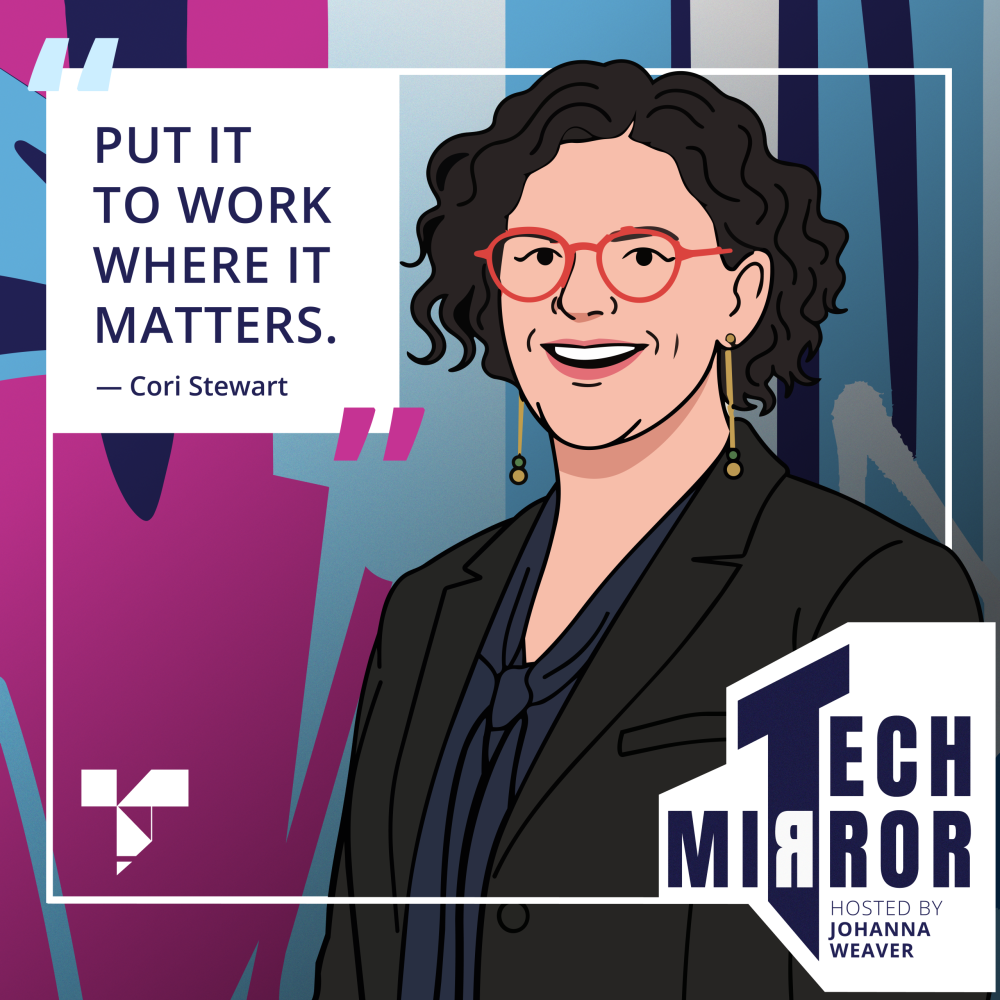
Is Australia getting AI strategy right? Following the PM’s “AI In Australia’s Interests” speech on 15 July, much of the conversation has focused on data centres and ‘national standards’. But according to industrial AI leader Cori Stewart, that’s not where Australia’s biggest opportunity lies. In this episode of Tech Mirror, Johanna Weaver speaks with Cori, the CEO of ARM Hub, about why Australia should focus on industrial AI, how Australian AI is already transforming manufacturing, healthcare, mining and agriculture, and what it will take to build the high-value industries that can power Australia’s future prosperity. From steel mills and medical devices to South Korea’s manufacturing success, this is a conversation about moving beyond hype and putting AI to work in the industries that will create Australia’s future jobs, capability and prosperity.
Links
Cori’s article in Innovation Aus: Australia is chasing the wrong link of AI.
AI In Australia’s Interests | Prime Minister of Australia
Tech Policy AI Agency Report | TPDI
For transcript and full show notes visit techpolicy.au/podcast
Transcript
Johanna Weaver: [00:00:00] The Tech Policy Design Institute acknowledges and pays our respects to all First Nations people.
We recognize and celebrate that among many things, indigenous people were Australia’s
first tech innovators.
If I was to say, “Actually, Corey, you’ve been doing such an excellent job heading up Arm Hub that the Prime Minister has asked you to come and lead the office of AI for three days.”
Cori Stewart: Day three, I try and figure out how to stay there. I love it.
Data centers alone do not create an economy. We should be focused on industrial AI, the industries that Australia is productive at and is competitive in. Obviously, there’s huge amounts of risk of having it all come together in one standard and think we’re going to address all of this without just sort of slowing everything down.
So I think we really need to be focused on what is going to [00:01:00] matter.
Johanna Weaver: Welcome to Tech Mirror. This is the podcast where we talk about how humans shape technology and how technology is shaping our society. I’m Johanna Weaver, your host, and today we’re particularly gonna be focusing in on the question of how Australia as a nation can shape technology. Now, as, uh, regular listeners of the pod will know, last episode, um, we were talking about the speech that the prime minister gave on the 15th of July, which I think many will look back on and say was a landmark speech, in which he argued that Australia’s future lies not simply in adopting artificial intelligence, but in shaping it.
And today we’re joined by Corey Stewart. She is the CEO of the Advanced Robotics for Manufacturing Hub, otherwise known as the ARM Hub, [00:02:00] and one of Australia’s leading voices on industrial AI. Corey, welcome to the pod.
Cori Stewart: Oh, thank you. It’s great to be here.
Johanna Weaver: Well, I’m really excited for this conversation, particularly because a- after the PM’s speech, you wrote what I think was one of the best comment, pieces of commentary that I’ve read about that speech.
And you welcomed the prime minister’s ambition, and you said it’s right for the PM to be placing artificial intelligence at the center of Australia’s economic, our social future, our national resilience, and I thought quite interestingly, you said, “And even our spirituality.” But at the same time, you also wrote that Australia was chasing the wrong type of AI.
So can you explain what you mean by that?
Cori Stewart: I do think AI is a very significant, globally transformative technology. Most nation states have been preparing with appropriately national large scale agendas and investments that are about taking [00:03:00] advantage o- of AI and managing AI as well. Um, so that’s why I do think Australia will be equally beneficial in taking a, a strong national approach, and it is transformative.
What the minister, uh- You know, in his speech was talking about when he said that all of his ministers were addressing this issue, and all of them had challenges. And I think that practically points to the fact that this sort of not addressing one issue at a time at different registers is what the benefit of bringing it in this one office is for the government.
But for a nation state at the broader scale, it’s to take advantage of it as much as manage it.
Johanna Weaver: Yeah, I think that’s so true. And, and the office of AI bringing coordination to the work that is happening across government, but also very powerfully, the PM was really clear in his speech. He kind of went through all of the different portfolios, and it was almost like he was issuing writing instructions for, you know, the treasurer, you’re focused on productivity.
Attorney General, you’re doing copyright and automated decision-making. And [00:04:00] Minister for Industry, you need to be focused on creating opportunities for industry to use artificial intelligence. And when you comment and say Australia’s focused on the wrong type of AI, what do you mean by that? What, what type of AI should we be focused on?
Cori Stewart: So I, I’m very strong, um, that we should be focused on industrial AI, and what I mean by that is we need to be focused on the industries that Australia needs to be productive at, is productive at, and is competitive in.
Johanna Weaver: Mm.
Cori Stewart: Um, all the industries that we need- Mm … for sovereign capability. And this has to be where our focus is.
Obviously, there’s huge amounts of risk of having it all come together in one standard and think we’re going to address all of this without just sort of slowing everything down. So I think we really need to be focused on what is going to matter, and I do see that we’ve… When I say it’s wrong, I’m saying we’re focused on data centers.
We know that the opportunity and risk is coming in with data centers, and yes, okay, [00:05:00] address it, but it’s not the thing that’s going to be productive. It is not… Data centers alone do not create an economy. Data centers alone do not help the businesses that make Australia’s profit and profitability allow us to have the kind of lifestyle that we’ve grown so accustomed to.
And also the regulation piece. Yes- Look at regulation. Yes, regulation can be part of the picture, but regulation alone, and I think we’ve learnt this from what we’ve done so far in Australia, it creates concern and fear rather than a sense of opportunity, pride, potential, and a kind of competitive drive to deploy AI at successful rates that is actually gonna make a difference across businesses and supply chains.
So what was worrying me, and why I say it’s wrong, we’re dealing with something that’s not productive for our economy in its essence. Being data centers, yes, need to deal with it. No, it’s not the main game. Regulation, yes, we need to deal with it, and yes, again, it’s not the main game that we need to be taking advantage of.
It was quite [00:06:00] silent about how we actually create the opportunity around AI, and the opportunity for Australia is industrial AI. Put it into our economy. Put it to work where it really matters.
Johanna Weaver: So I’m gonna, in defense of regulation, ’cause I am the Director of the Tech Policy Design Institute, say I agree with you on that, except for, uh, my caveat would be, it’s poorly designed regulation that has that impact.
And if we have well-designed regulation, it can actually increase confidence and actually have the adoption going out through the economy. But going into your point around industrial AI, when we’re talking about that, we’re basically talking about AI that’s embedded in factories and mines and hospitals and in farms.
For people who don’t know the ARM Hub, can you just maybe give a little bit of an introduction, and what is advanced manufacturing and robotics in that sense?
Cori Stewart: Yeah, so ARM Hub is a independent not-for-profit company, and our job is to accelerate the adoption of new advanced manufacturing technologies. [00:07:00] We have got particular deep capability in robotics and also AI broadly, enterprise AI.
We run a data capability, a data service provider for industry. We run the nation’s AI Adopt Center for Industrial Tech. So we every day are working with tens of companies daily about how they’re going to be adopted tools that can make them do that, test it, trial it, deploy it, see it in operation, and figure out with their staff and their workforce what that deployment might look like and what needs to happen to make it successful.
Because there’s lots of information about regulation. There’s lots of information about the risks, ’cause the media likes risks, and everyone likes to highlight risk, and manufacturers in particular, or industrial tech more broadly, have had issues around cyber. That’s kind of where they, uh, ransomware and, and the like.
And they have organized their businesses to counter that. But this kind of risk profile has day to day stopped so many businesses thinking that they have a [00:08:00] capability to adopt AI successfully rather than shut down. It’s too expensive, too many risks, don’t know how to manage every little bit from tokens to my staff opinion, um, and how a- an AI tool might, might operate.
So I think that’s what we’re seeing every single day, and that’s the role of the ARM Hub is to, to build confidence through actually demonstrating and deploying these tools sort of hand in hand in many ways, um, with manufacturers and industrial companies and their supply chain.
Johanna Weaver: And when you say there, Corrie, that the, the companies have the fear about the risks with respect to implementing or deploying artificial intelligence, do you mean that they worry that they might deploy it and something will go wrong?
Is that the primary fear that you think people hold?
Cori Stewart: No. Mm. The primary fear is that they won’t be able to get a kinda ROI on it. Mm. And they’re very practical businesses, particularly the small to medium businesses. Like, by the time, honestly, that they think, “Okay, can AI solve this problem for me? I’ve got a business problem.”
By the time they’re thinking about that, they’ve got a real [00:09:00] problem, and that real problem is in their business now. So they have to really think about how can I, for want of a better phrase, um, they’re normally heads down, bum up, working really hard, trying to make everything commercially viable and successful.
If I stop this process and I go through the right development- Phases that I need to ensure all the aspects of AI. It can be kind of overwhelming because you still have a customer at the end of the day who needs something.
Johanna Weaver: And so can you give us some practical examples of how, um, uh, companies that ARM Hub has works with that illustrate what this actually looks like in practice?
So I guess, what was the business problem that they were trying to solve? How did you roll out the AI, and, and what changed as a result of that?
Cori Stewart: So there’s a company that we worked with called AuCon Steel, and, you know, th- their business problem’s highly practical. You know, operators really needed to manage that variation in steel coils.
They’ve got these large, massive coils that, that have [00:10:00] various quality of steel or inconsistencies in that steel, and the production conditions can change. So they needed to manage that while maintaining the quality, reducing the scrap because of efficiencies, and also really keeping their operators, um, safe and away from the heavy-moving machinery.
So the, the process really relied, at this stage, on, um, the tacit knowledge of operators’ experience to do manual adjustments, and, and it meant they were often in the critical high-risk process if they had to adjust anything. They worked with the ARM Hub and the team here to, to build an AI-enabled solution.
Now, this was really about going back through machinery data and production data over time, looking for the patterns and the inconsistencies or where these errors would emerge, and creating a tool which is a, a, a risk management tool, like a, an AI maintenance and warning tool when, uh, I guess, the conditions for the steel as well as the process hit a certain peak that would flag to the operator.
It was like an assistive tool that these are the early warning signs, [00:11:00] we must have a look at the operational floor. Um, and that really helped in a very practical Productive way with time down, staff time, inconsistency so that you didn’t have to do rework of projects. Um, but I suppose most importantly, it did keep, uh, the staff outside of a kind of the highest risk safety zone, uh, when error happens with these big steel presses, and they were making, um, very large infrastructure.
Johanna Weaver: Much of the public conversation in Australia is really focused on knowledge work, you know. When people think about artificial intelligence, they think about ChatGPT or Claude and the like. And you argue that Australia’s biggest productivity gains won’t come from that particular type of artificial intelligence.
Where do you think the biggest opportunity lies for Australia? If we’re talking about the physical economy, you talked there about steel. Where are the other opportunities for productivity gains that people aren’t [00:12:00] talking about?
Cori Stewart: Yeah. Uh, there’s huge opportunity gains in the kind of industrial infrastructure because, you know, even a certain uplift in workers’ capability to be on the job, less downtime.
I guess machinery failing was the example I gave, but it could be yield of agriculture, um, related to the ability to use the machinery or farm that agriculture, um, be able to use chemicals safely and monitor them. It could be medical diagnosis. It could be food and beverage recipes and their, their production processes.
All of these, um, environments are under-automated. Like Australia in its industry sector is one of the most under-automated industries in the world. So for example, South Korea, ’cause I was recently there, for every 10,000 people in South Korea, they have 1,220 robots. For every 10,000 Australians, we have 134.
So it’s just an [00:13:00] indicator of just how severely- chronically under-automated our industry sector is.
Johanna Weaver: And w- and why do you think that in Korea they are using so much more automation?
Cori Stewart: Korea’s an interesting case. So in the 1960s, and I, I’m not gonna do a, a history lesson here, but in the 1960s they were just out of war and then they were, like, in poverty, and they pulled themselves out of poverty into being a very high-performing, productive, competitive economy through manufacturing.
So they have had dec- decades and as an imperative. And in the meantime, Australia at the same time was actually already kind of well off. We had a high level economy. We focused on the resource economy. Globally, the economies that have focused on being a resource-intensive con- economy, so digging and shipping- Mm
essentially, have all really dropped in the productivity stakes, the economic value stakes, and are really struggling to compete as, as kind of competitive economies. So Australia exemplifies that. [00:14:00] In fact, in the OECD, we’re the country with the least manufacturing capability, so the least capability to deploy manufacturing to add value to industries.
South Korea s- really has done this because they’ve aligned everything they do to making this successful. So they’re measuring productivity, they’re measuring economic gains out of AI. They’re not measuring, you know, how many companies exist in a, in AI m- and how we’re using AI or AI uptake. They’re actually at the point that they can measure the inputs through AI and their policy gains and through programs, and say how that’s been deployed.
Johanna Weaver: It’s almost a mindset shift you’re talking about there.
Cori Stewart: Well, it is. I, I think it’s happening. Uh, we’ve been talking about it for over a decade, uh, as, as a country and as, as leaders in the kinda industrial space, we’ve been talking about what happens in a post-mining boom economy, and what happens when you don’t have manufacturing.
It means you don’t have high-value [00:15:00] industries, and you don’t have high-value jobs across and in all corners of your country, so you’re relying on having a service economy. And I think the service economy in Australia is, you know, down around the sixth or seventh kind of major economic contributor. Um, so, you know, up we’ve got mining, agriculture, our technology services, medical.
They’re all higher of, of more s- um, value than, I guess, what we traditionally had pegged our capability on. But really since COVID, every country has had a very close look at exactly how they can become more competitive in manufacturing and production, and we have- Mm … to do it a lot more competitively with the rest of the world.
Johanna Weaver: When people hear you say the future of the Australian economy is manufacturing, a lot of people will think, “But that’s what we used to do, and then we modernized the economy.” And you’re now… But you’re talking about a different type of manufacturing, so can you speak a little bit more about that? What is advanced manufacturing or manufacturing in the future for Australia?
[00:16:00] What might that look like?
Cori Stewart: What we’re competitive at now and what we need to scale to be even more competitive at is the high-value manufacturing. So, you know, it could be, you know, it’s the making of, say, rockets. It’s making of biotechnologies. It’s often the high-value, mass customized, sometimes, you know, value-added industry.
So it’s not just digging and shipping lithium and shipping it overseas for China to make everything, and so we can buy it back at, like, you know, 150 times the value. It’s being able to get more of that high value, really smart factories with highly skilled people. What I argue for and what I know is that industrial AI is an opportunity to build the tools to make this kind of manufacturing better.
Look, there’s many, many examples. I’ll use the ones that are close to me, ’cause companies that we work with every day. One, one I really love to talk about, because it’s, like, saving lives, is a company called Microbio, and the company manufactures its own molecular diagnostic test, and it identifies 26 types of [00:17:00] sepsis-causing pathogens from a blood sample.
But the real strategic asset, yes, it was a manufactured test, but the real strategic asset itself is its ability to integrate with all of the data that’s required. So all of the clinical trials data, all of the hospital data, the patient data, um, so it could bring down what was a gold standard for sepsis detection from, um, 20, 24 hours down to three.
And sepsis, people die very quickly, um, when, potentially when they have sep- sepsis, so this is hugely life-saving Technology that is dependent on not only the manufacturing capability, but to have real time fast data that you have access to, all, you’ll like this, all of the regulatory approvals in place.
Obviously very important and very complex and medical, but all being able to be accommodated and adhered to. And then getting through those regulatory pathways and getting to export. So they’re in Spain and across Europe, um, in Africa. They’re still working on [00:18:00] the, their US, uh, approvals as we speak. But they’re exporting this technology.
They’re building their next products for this market, ’cause all companies actually need a pipeline of really successful products, not just the one, the one hit wonder.
Johanna Weaver: What, what do you think the most important thing would be, Cori, to make more companies like that in Australia? What do we need, whether it’s from the government, what’s the blocker currently?
Cori Stewart: One thing about South Korea, and also one thing about all the other countries that we’ve looked at, including Europe, is that there’s much more funding available for companies to get through their really high risk periods. So I’ll just give a South Korea one. So companies that are in manufacturing get about half of their manufacturing expenses paid for.
So that’s everything, which is a huge news to an Australian. Like, look, operational expenses, marketing expenses, going to market, um, employing people, the whole bit. Um, it comes from different departments, but it is about [00:19:00] half of all of that is solved. Then a company that wants to then use that manufacturing, or particularly if it’s tech, like a robot, or is it, get half of that funded so that they can adopt it quickly.
So you’ve got the double whammy of incentive, and it makes it very compelling for them to build that technology and export it, ’cause they’re also an exporting intensive nation. So they’re good to look at. As Australians, we’re quite good at looking abroad and reporting back, but we’re not great at doing it.
So at the moment, we have almost no sequenced investment for companies, either startups or small to medium enterprises in particular, able to get that level of subsidy or move forward. So I think it makes it hard for us, hard to compete and hard to therefore export. Um, we have things like the NRF. It supports a small cohort sh- that are real breakthrough examples.
But underneath that sits an economy which is 98% SMEs, and a lot of those SMEs are small and family-owned [00:20:00] businesses that have existed for more than 10 years. Um, they have real clients, real customers, real needs. They service communities that are pinnacle. So we really can’t ignore these other critical economies that make Australia work, and which are often exporting companies.
Johanna Weaver: If I was to say, “Actually, Cori, you’ve been doing such an excellent job heading up Arm Hub, that the prime minister has asked you to come and lead the office of AI for three days, uh, at which ti- point you have extre- you know, ultimate power to implement policies, go, go redesign Australia’s manufacturing ecosystem,” what would be the things that you would prioritize, um, in your three days of power?
Cori Stewart: Well, I love I’ve got three days. So I’ve got three days. Okay. Look, I think one of the most practical things to do is to look at what we have got and continue some of the things that are really important or are the, the seeds of things that should be scaled. Um, and one that I’m closest to is the AI Adopt Centers.
So one of [00:21:00] the challenges is that they were too small in their, in their vision, right? So we, we started with Of around $100 million, and I think at the end it was a grant of $11 million that got divided up against centers to help with this diffusion. We need to scale that and make resources available to industry to deploy it.
So I would first keep going with the thing that’s working so that industry didn’t have another blank sheet for a period of time where, um, so many things are going to fall over in the, in the near horizon. So we need to address the near horizon. So day one, maybe address the near horizon. Day two, I would set up, oh, on a large scale industrial complex where it deals with all advanced technologies and capabilities required to build the industrial, Australia’s industrial complex, and I would build place-based innovation ecosystems.
Johanna Weaver: Mm-hmm.
Cori Stewart: Where we, we can attract and host large scale industry, we can support complex supply chains, we can build the future of skills and attract skills. So we’re, we’re attracting investment and skills, building investment and skills, and we’re, um, we’re, we’re committing to 10 years, 20 years of [00:22:00] doing this so that we can sustain and rebuild an economy over time to be very successful.
We really need that level of focus. Um, so I would, I would do that. Day three, I try and figure out how to stay there.
Johanna Weaver: I love it. I don’t know- Isn’t
Cori Stewart: that, isn’t that the cycle with politics too?
Johanna Weaver: I think that’s brilliant. I think that’s brilliant. Y- yeah. Um, but we also need you back at the Arm Hub to implement all of this, so, uh, you know, it’s a, it’s a challenge.
And so assuming, so you’ve done that, and you’re now back sitting in the Arm Hub, you’ve got, um, which coincidentally Brisbane and surrounding areas, um, has actually been named as one of these place-based, um, manufacturing hubs- Okay, great … that you have just established. How does, how and what would you be doing now that you’re back in your day job that would actually help…
You’ve spoken there very eloquently about how many small and medium enterprises we have in Australia. How do we actually get the mums and dads that, you know, [00:23:00] 97% of the Australian population is these SMEs. There is the fear and hesitancy that you spoke about. How do we actually get them to be adopting this and transforming the economy, not so that AI’s taking people’s jobs, but so that it’s actually creating new jobs for people?
Cori Stewart: I have to say straight after years now, um, two years specifically with the AI Adopt Center, but six years doing AI broadly, AI has not taken jobs in the work that we do. Like, I can’t, I will never say AI won’t change jobs, ’cause of course it will. But it, it has built a capability, makes companies more competitive.
It builds the skill value of your employees, and for a lot of them, you know, every time, say, they even adopt a robot, they get one or two new staff. They’ve got to maintain and operate that. They’ve got the financial capability to invest in those technologies and that equipment and that infrastructure, and they grow and scale.
And the others really just plateau. So what I would do is I would [00:24:00] take the hints that we have from all of our knowledge around the world, and also our past when it’s worked, and I would say give people the resources they need to be able to make that change occur in their business without making that business fail.
You know? Mm. Mm. It’s really as simple as that. Mm. You cannot expect a business to trans- transform if it’s only going to put it at risk of operation, and we need to do that. So I would not focus even on the investment, ’cause the investment capital will come. Data centers are there. We’ll be able to actually use them if our industrial complex actually has that growth and capability.
At the moment we might be supporting all the AI of other nations, but we probably have little use as a nation o- on the whole to actually access that level of compute. So like all the other bits will come if we actually focus on firm-level, supply chain-level [00:25:00] capability, and we invest in these, these companies and these sectors.
So that would be the one thing I’d do, is put the investment back in the businesses that make our economy work. When we set up the Arm Hub, one of the things I put a lot of time into with my colleagues, ’cause I spun out the Arm Hub from QUT at the time, was we, we sought the funding for it to set up, uh, the Australian Cobotic Center, which is a research, um, ITTC, so Industrial Transformation Training Center.
And so it was, you know, $16 million over five years to help companies adopt cobots in a safe way. So out of that has come- And what, what’s a
Johanna Weaver: bot? It’s ca-
Cori Stewart: it’s a collaborative robot, which it means it’s a safe robots for humans to work close next to. So they can move and adjust the robot, so they can have it in their workflows.
They don’t have to be in a cage, um, because they might hurt you. They are basically a smarter tool than maybe your current tool kit. Um, but we need to obviously train people to be able to use these tools, and we need to create, demonstrate to industry the kind of [00:26:00] productivity you can get and the kind of pro- new products you could even make.
So for example, there was a whole bunch of industries that work with that, but the one in my mind was Cook Medical. They make, um- Heart stents. I think stents has a more modern name, but basically if, when people, um, need to have kind of urgent, um, replacement of a stent in their heart from a, you know, a heart attack, they get a personalized screen of…
That is, and, uh, humans had to then knit a new stent, a steel stent, in a short amount of time, and that had to be quality assured by a human eye, and then sent to the hospital for this replacement, and they were always under huge, um, demand to produce these in a, obviously a certain time, again, life-saving amount of time, and under a lot of pressure.
And sometimes, you know, if it didn’t make it, or if it, the quality of it wasn’t good enough, or it ha- had to go back and be remade because the quality wasn’t good enough, it, there are risks of doing that. So they were building cobots that could do a lot of the very, very tiny spot welding on [00:27:00] these, um, stents that could be quality assured by a vision system, by a machine that was a lot more accurate than a human testing it by eye before going into the, the human patient.
So this was a… These are non-trivial engineering challenges, as my team like to call them. They take years to solve, years to verify, and that center has been operating now for four years, nearly five.
Johanna Weaver: I, I love that example, and partly for self-serving reasons, because in the AI agency assessment, what, some of the areas where we found that Australia had the highest agency, so the highest capability, was in things like computer vision, physical AI, our data assets and skills, and that is all exactly what is going into that mix that you’ve just referred to there.
That’s
Cori Stewart: right.
Johanna Weaver: So final question for you. Looking ahead in 10 years’ time, what does success look like? Can you maybe help paint a picture of an industry of the future that we’re maybe not [00:28:00] even thinking about at the moment, and what that could mean for Australia’s future?
Cori Stewart: Yeah, I think one, I think let’s look at how, um, the food sector, the food and beverage sector, that Australia’s very much the food bowl of a lot of the world, how this sector becomes also our bio sector.
You know, build the new materials, like, that are going to be able to drive our science and our engineering and kind of biochemicals, biomaterials, bio food products. AI is going to be the tool that, amongst other tools, but it’s gonna be the overarching tool that sort of is allows us to go refine and become competitive at, like quality assurance, recipe testing is, is really important, chemistry for products.
All of these are al- we are already using AI in the R&D space, but we’re not deploying it often into industry. So we’re good at it, let’s keep going at it. When we build this, this future around our, our [00:29:00] biomedical industry, we will be leveraging a lot of the unique proteins, the unique discoveries we can garden from our very complex and high-value agricultural sector.
So that is where I think we are going to see a huge amount of innovation and expertise coming to the fore, and AI’s gonna be across everything. So it’s gonna, it’s gonna be from manufacturing to R&D development, um, and it’s gonna be part of our marketing, our solutions, and export capability. What we need to do is own that knowledge, so we need to own the data so we can keep improving on our ability to do that, and make sure that we’re not just letting that go offshore to some other provider or big language model that will just become better at our business than we are, and ultimately tell us how to do the kind of productivity gains that they wanna see, and reap the, I guess, the profits of that from Australia.
Johanna Weaver: Thank you so much, Corey. I’ve really enjoyed this conversation. I really wanna come and have a look at some of the tech toys and things that you have. Um- Yeah … [00:30:00] every time I see, uh, pictures, it looks very cool.
Cori Stewart: Come and see how people are actually trying to make it all work.
Johanna Weaver: Amazing.
Well, that’s it for this episode of Tech Mirror, which is brought to you by the Tech Policy Design Institute. We’re based here in Canberra on the lands of the Ngunnawal Ngambri people. If you found today’s conversation useful or thought-provoking, please do share it with a friend or a colleague, or leave a review and subscribe wherever you get your podcasts.
For show notes, you can visit techpolicy.au/podcast. And this podcast was made possible with thanks to the generous contributions from government, industry, and philanthropy to the Tech Policy Design Fund, the full details of which are available on our website. The team at Audiocraft produced this pod on the lands of the Gadigal people of the Eora Nation.
Music is by Thalia Skopelis. A big thank you also to the team at the Tech Policy Design [00:31:00] Institute, without whom this pod would not be possible. Thank you for joining us, and as always, get in touch and get involved